
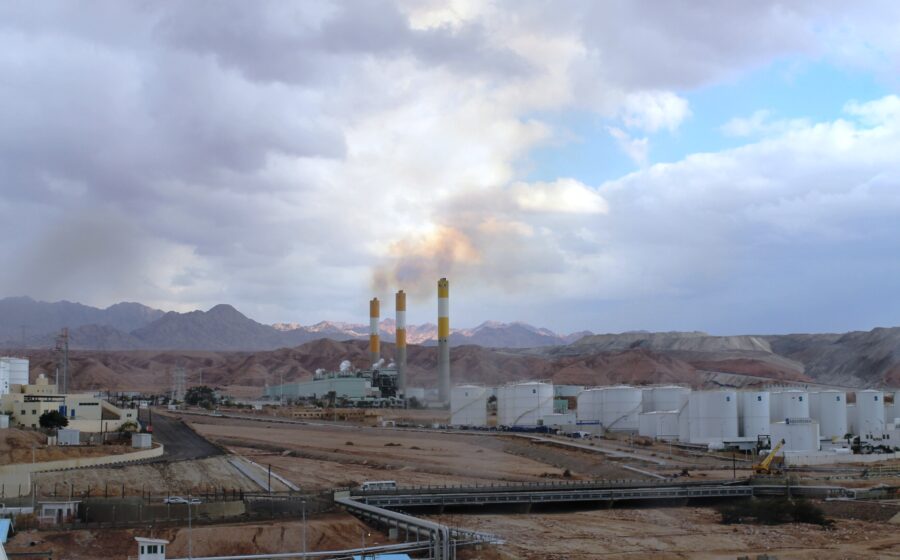
Jordan’s King Abdullah II and Iraqi President Nizar Amidi agreed on Monday, October 19, 2026, that the long-stalled Basra-Aqaba oil pipeline should move ahead, according to the Royal Hashemite Court, as disruption in the Strait of Hormuz continues to weigh on Iraq’s oil exports.
A phone call with a pipeline at its centre
The two heads of state spoke by telephone on Monday, in a call initiated by the Iraqi president, Asharq Al-Awsat reported. A statement from the Royal Hashemite Court, quoted by Al-Ahram, said both leaders stressed the need to proceed with implementing the Basra-Aqaba oil pipeline because of its importance for the interests of the two countries and their peoples.
According to the Jordan News Agency (Petra), cited by Arab News, the call also covered ways to expand cooperation across several sectors. King Abdullah underlined the need to de-escalate regional tensions and protect the security and stability of Arab states. He also called for a halt to Israeli actions in the occupied Palestinian territories and voiced support for Syria and Lebanon in preserving their security and sovereignty.
The statements did not mention a new timetable, a financing plan or a contractor for the project.
A project first agreed in 2012
The idea is not new. Jordan and Iraq signed a framework agreement in April 2012 for a pipeline of about 1,700 kilometres designed to carry up to one million barrels of crude per day from Basra, on the Gulf, to the port of Aqaba in southern Jordan, on the Red Sea, Asharq Al-Awsat recalled. The newspaper put the estimated cost at around $18 billion.
Under the plans described by the same source, Jordan would receive roughly 150,000 barrels per day for its own needs, while the scheme would also include storage capacity of seven million barrels and an export terminal. More than a decade on, construction has not started, and the project has repeatedly resurfaced in bilateral talks without reaching the implementation stage.
Why the route matters now
The renewed attention reflects Iraq’s heavy dependence on a single export corridor. Before the current regional conflict, Iraq produced about four million barrels per day and exported around 3.5 million, mostly shipped from its southern terminals through the Strait of Hormuz, Asharq Al-Awsat reported. Restrictions on traffic through the strait have since curtailed those flows.
The same report said Iraq’s foreign currency reserves have fallen by about $20 billion and that consumer prices have risen sharply. It also noted that Iraqi Parliament Speaker Haibat al-Halbousi, visiting Amman on June 7, described the Basra-Aqaba line as a “strategic option” for his country given the constraints on exports through Hormuz.
For Jordan, a pipeline ending in Aqaba would mean a dedicated crude supply and a role as a transit point for Iraqi oil. For Baghdad, it would open a westward outlet to the Red Sea that does not depend on the Gulf shipping lanes.
Obstacles and open questions
The project’s long delay points to the hurdles that remain: the scale of the investment, the length of the route across Iraqi and Jordanian territory, and the need for sustained political backing in both capitals for a large cross-border energy deal. Monday’s call signals political will at the top in both capitals, but no practical steps were announced.
Observers will be watching for follow-up meetings between oil ministries, any revival of tendering, and whether Baghdad includes the pipeline in its budget and investment priorities in the coming months.
Read more
 Saudi Arabia dominates Middle East hotel expansion with 50% of development pipelineSeptember 23, 2026
 Saudi fintech Abwab.ai raises $4m in seed round led by SpeedinvestSeptember 21, 2026
 Closing Bell: Saudi Main Index Slips to Close at 10,864September 13, 2026
 🇸🇦✨ Pourquoi les grandes marques de luxe se développent en Arabie saoudite ?August 30, 2026