
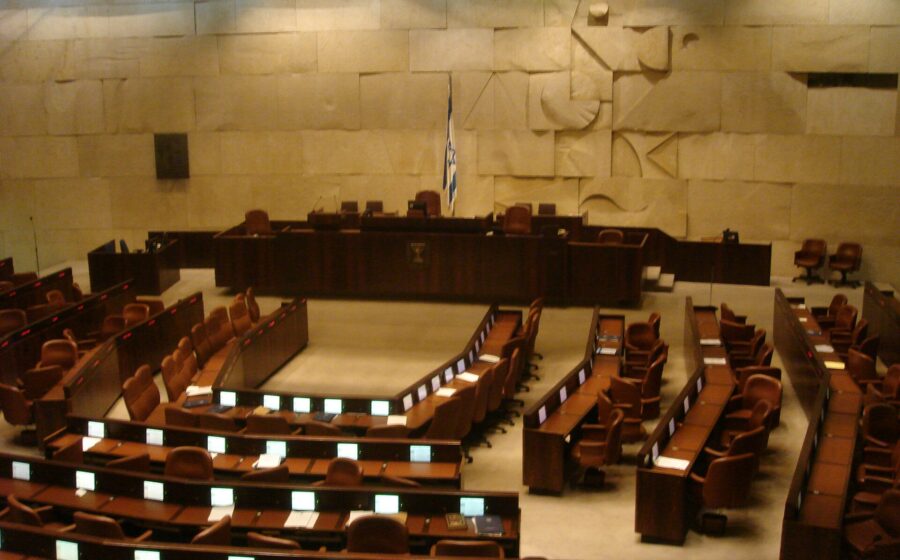
Eisenkot sets coalition terms as Netanyahu camp disputes Israel election outcome
Israeli opposition leader Gadi Eisenkot said over the weekend he would move immediately to assemble a parliamentary majority, setting out conditions for potential partners, while Prime Minister Benjamin Netanyahu’s Likud party continued to question the legitimacy of the October 27 vote, according to Asharq Al-Awsat, Al Arabiya and earlier reporting by AP and AFP.
A parliament without a majority
The full count of Tuesday’s election gave Netanyahu’s bloc of right-wing, far-right and ultra-Orthodox parties 53 seats in the 120-member Knesset, against 48 for the opposition bloc led by Eisenkot, a former military chief. Arab-led parties won 19 seats, a record, leaving neither camp with the 61 seats needed to govern, AP and AFP reported.
According to the tally reported by Asharq, Likud is the largest party with 26 seats, followed by Eisenkot’s Yashar party with 21 and the Beyahad list of Naftali Bennett and Yair Lapid with 12. The Joint List won 11 seats and Ra’am eight, as did the Democrats. Turnout reached 77.7 percent, the highest since 1999, according to the Central Elections Committee figures cited by Al Jazeera.
The results are due to be formally published on November 4, Al Jazeera reported. President Isaac Herzog will then consult party delegations before tasking the candidate he considers best placed to form a government. Herzog has said he wants to avoid another election and asked parties to come to the talks “with an open mind”.
Dispute over foreign interference claims
Tensions rose last week after the head of the Central Elections Committee, Supreme Court Justice Noam Sohlberg, asked the Shin Bet security agency to examine “serious suspicions” of foreign interference, while stating he could not verify them, AP reported. Likud responded that the election had been “stolen”, a claim it made without evidence; Qatar, named by some Likud figures, called the allegations “ridiculous and dangerous”.
The Shin Bet said its inquiry was narrow in scope and did not cast doubt on any sector of voters, according to Asharq. Eisenkot accused Likud of trying to delegitimise the results. “They are doing this because they lost,” he said, as quoted by AP.
Eisenkot’s conditions
In a written statement on Saturday, Eisenkot said the outcome was clear “despite those seeking to cast doubt” and that he would seek the “broadest possible” coalition, Asharq Al-Awsat reported. He listed as priorities a state commission of inquiry into the October 7, 2023 attack, military or civilian service for all, the repeal of the judicial overhaul laws and efforts to restore Israel’s international standing. Until a government is sworn in, he said, he would back military operations only in response to direct and immediate threats.
Al Arabiya reported that Eisenkot set four conditions for partners: recognising Israel as a Jewish and democratic state, commitment to the values of its Declaration of Independence, mandatory military or civilian service for all citizens, and acceptance that Hamas’s military capabilities must be dismantled. Ra’am leader Mansour Abbas said he was ready to discuss them, the channel added.
During the campaign, Eisenkot said he would not govern with Arab lawmakers, AFP reported. Asharq Al-Awsat, citing people close to him, said he is now considering a minority government with some ultra-Orthodox support and outside backing from some Arab parties. Israel’s Channel 12, as cited by Asharq, reported that sources in United Torah Judaism (seven seats) floated supporting such a government from outside; the party has not taken a formal decision.
Liberman yet to decide
Avigdor Liberman, whose Yisrael Beytenu holds seven seats, has not yet decided whom to recommend to the president, Asharq Al-Awsat reported, describing Eisenkot’s allies as his main weak point. Liberman had pledged before the vote not to partner with Netanyahu, AP noted.
On Saturday evening, several thousand people rallied in Tel Aviv for a government including Arab parties, while a Likud-organised counter-rally drew hundreds, according to Asharq Al-Awsat.
AP outlined the main scenarios: an Eisenkot-led government relying on Arab parties, a unity government with Netanyahu, defections from either camp, or a new election early next year, with Netanyahu remaining caretaker prime minister until a government is formed.
Read more
 Arab vote seen as pivotal as Israel heads to Tuesday’s Knesset electionOctober 24, 2026
 Syria names ex-KPMG adviser Omar al-Halabi to chair its sovereign wealth fundOctober 19, 2026
 One year into Gaza ceasefire, deaths continue and reconstruction has yet to beginOctober 12, 2026
 Court overturns UK decisions blocking Gaza mothers, children from family reunificationOctober 4, 2026