
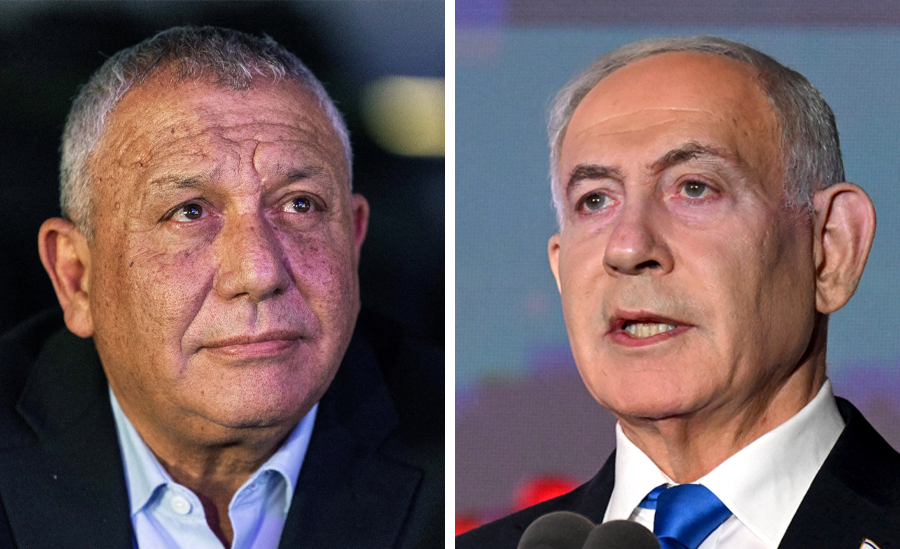
Palestinian citizens of Israel, about a fifth of the population, could tip the balance in Tuesday’s 27 October Knesset election, with polls showing neither Benjamin Netanyahu’s bloc nor the opposition on course for a majority, according to Al Jazeera, Anadolu and the Associated Press.
A parliament without a clear majority
Israelis vote on Tuesday for the 120 members of the Knesset in the first national election since the Hamas-led attack of 7 October 2023. Forming a government requires the backing of at least 61 lawmakers, a threshold that, according to recent polling cited by Al Jazeera and Anadolu, neither Netanyahu’s right-wing camp nor the opposition parties led by former army chief Gadi Eisenkot is projected to reach on its own.
That arithmetic has put the spotlight on the two main Arab-led lists. The United Arab List, known as Ra’am and led by Mansour Abbas, and the Joint List, an alliance of Hadash, Ta’al and Balad headed by Yousef Jabareen, are projected to win between 13 and 15 seats together, depending on the survey. The Associated Press described Arab-led parties as potentially decisive if Jewish parties agree to work with them after the vote.
From disqualification to the ballot
The two lists almost did not make it onto the ballot. On 23 September, Israel’s Central Elections Committee voted to disqualify both Ra’am and the Joint List. The Supreme Court overturned those decisions in early October, allowing them to run, Al Jazeera reported. Balad’s Sami Abu Shehadeh withdrew his own candidacy after the court signalled that a majority of justices backed his disqualification.
Turnout as the key variable
Arab turnout stood at about 53 percent in 2022. This time, experts and politicians quoted by Anadolu expect participation to climb to around 60 to 61 percent, while a campaign operative cited by Al Jazeera pointed to surveys suggesting about 62 percent intend to vote, with Arab parties aiming for 70 to 75 percent.
Higher turnout would not only add Arab seats but could also push small right-wing parties below the electoral threshold, Arab politicians argue, narrowing Netanyahu’s path to a new coalition. In street interviews conducted by Anadolu in Arab towns, several voters described this election as decisive, while others said decades of voting had changed little in their daily lives.
Kingmakers no one wants to court openly
Despite their potential weight, the Arab parties remain politically isolated. Netanyahu and Eisenkot have both ruled out alliances with them, and most opposition leaders reject such cooperation, according to Anadolu and Al Jazeera.
The Joint List has said it could act as a “safety net” for an anti-Netanyahu government by not voting against it in a confidence vote, in exchange for conditions that include a path to Palestinian statehood and action against organised crime, Al Jazeera reported. Arab lawmakers have also set out demands such as ending the wars and ending discrimination against Palestinian citizens of Israel, Anadolu said.
Ra’am already made history in 2021 when it became the first Arab party to join an Israeli governing coalition, briefly helping to remove Netanyahu from power. Whether either list plays a similar role this time will depend first on how many of Israel’s Arab citizens turn out on Tuesday.
Read more
 Syria names ex-KPMG adviser Omar al-Halabi to chair its sovereign wealth fundOctober 19, 2026
 One year into Gaza ceasefire, deaths continue and reconstruction has yet to beginOctober 12, 2026
 Court overturns UK decisions blocking Gaza mothers, children from family reunificationOctober 4, 2026
 Guterres appoints Deemah Al-Yahya as member of high-level UN teamOctober 1, 2026