
Standfirst: Iranian authorities are hardening their response to what they describe as threats to national security, executing three men over January’s protests on Sunday, November 8, and moving against public gatherings of young people in Tehran, according to the judiciary, AFP and Al Jazeera.
Iran’s security apparatus is on high alert as the war with the United States and Israel enters its ninth month and Washington threatens a new wave of strikes. Officials have warned the public of heavy sentences for anti-government protest, while analysts say the authorities are casting a wide net that sweeps up alleged foreign agents, protesters, journalists and ordinary citizens alike.
Three executions over the January unrest
On Sunday morning, the judiciary’s Mizan Online website announced the execution of Hassan Divband, Hamid Kazemi and Reza Zanganeh after the Supreme Court upheld their death sentences, AFP reported. The court found them guilty of “participating in operational activities on behalf of the Israeli Zionist regime, the United States and hostile groups” during the protests.
According to the judiciary, the men used Molotov cocktails, grenades, bladed weapons and firearms and set fire to public facilities in Karaj, west of Tehran. Other defendants in the case received prison terms of five to 10 years. A day earlier, AFP reported, citing Mizan, that Iran had executed Mohammad Aref Shahbakhsh, described as an operative of the outlawed Baluch militant group Jaish al-Adl.
The protest movement began in December over the high cost of living and grew into nationwide anti-government demonstrations that peaked on January 8 and 9. Iranian authorities reported more than 3,000 deaths and blamed “terrorist acts” orchestrated by the US and Israel, while foreign-based rights groups cite higher figures and say security forces fired on protesters. An independent United Nations fact-finding mission found that crimes against humanity were committed during the crackdown, Al Jazeera reported.
Espionage cases and blurred lines
The number of executions has risen since the war began in late February with US-Israeli strikes on the Islamic Republic, AFP noted. Al Jazeera reported last month that judiciary spokesman Ali Kazemi had cited active cases against at least 1,895 people, including 94 media workers, accused of cooperating with Israel or other hostile states.
Analysts quoted by Al Jazeera acknowledge that Iran faces a genuine espionage threat, but argue the authorities increasingly treat dissent, independent reporting and contact with foreign media as extensions of foreign intelligence activity. Tehran says it is confronting a “hybrid war” combining espionage, sabotage, hostile media and efforts to stoke ethnic tensions.
Pressure on young people in public spaces
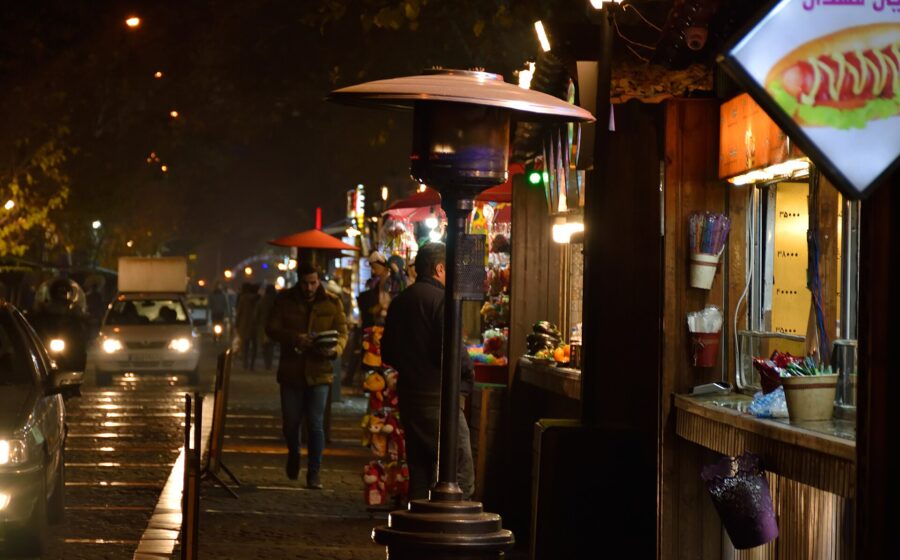
The tightening also reaches social life. On October 30, security personnel dispersed hundreds of mostly young Iranians who had gathered in costumes in cafes on Tehran’s Iranshahr Street for Halloween, and cafes were closed, Al Jazeera reported, citing accounts of assaults and detentions. The authorities did not officially comment, but pro-government booths have since been set up on the same street.
Political scientist Ali Alfoneh told Al Jazeera that enforcement of some social rules had at times been relaxed, while repression appeared to be reserved for political freedoms and anti-government mobilisation. Mahjoob Zweiri, of Qatar University’s Gulf Studies Center, said whether the conflict ends in a negotiated deal or in further war would shape the prospects for renewed protests.
Read more
 Israeli strike kills one in south Lebanon, first such death since SeptemberNovember 5, 2026
 Iraqi PM al-Zaidi holds talks with al-Sharaa in first Damascus visit since Assad’s fallNovember 1, 2026
 Netflix’s Obsess brings Kuwaiti psychological horror to streaming on October 30October 29, 2026
 Rubio presses Lebanon’s Aoun not to return seized Hezbollah explosivesOctober 17, 2026