Datecrete, a cement-free building material made from discarded date pits by Dubai-based Datecrete Studio & Lab, has won sustainable design of the year at the 2026 Dezeen Awards, announced in London on November 16, as well as the public vote for material innovation, according to Dezeen and The National.
The studio was founded by Palestinian urban planner and material researcher Sara Farha and Lebanese chemical engineer Khaled Shalkha, a husband-and-wife team who both grew up in the UAE. They have spent about five years developing the patent-pending material, which contains no cement, resins or petrochemicals, The National reported.
Turning farm waste into a building material
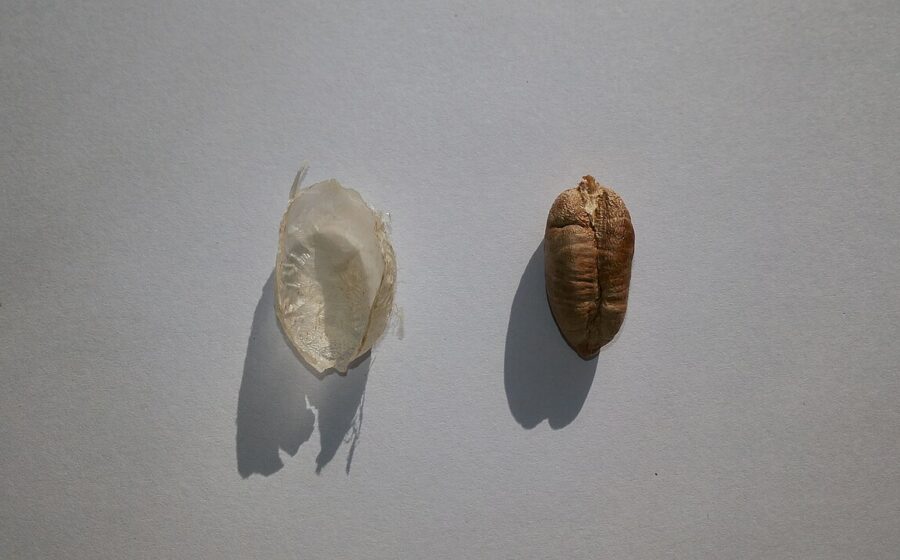
The founders told The National that field research showed only a small share of date pits from the region’s date industry was reused, mostly as cattle feed. The pits contain lignocellulosic compounds also found in wood, which suggested potential as a construction material. The harder task was finding a way to bind them, and the pair eventually developed a natural binder inspired by historic regional building techniques.
Mixed with ground date pits, the binder produces a solid with a look somewhere between natural stone and concrete. It can be poured into moulds and is being used for floor and wall tiles, cladding, furniture, lighting elements and smaller objects. Shalkha said the material absorbs carbon dioxide over its lifetime as it hardens, and, unlike ceramics or porcelain, it does not require firing in energy-intensive kilns.
The Dezeen Awards master jury called it “a necessary regional innovation, repurposing an abundant waste material (date pits) into a local construction material, and providing a welcome alternative to concrete”. The judges added that because the processing of pits is decentralised, it “has the potential to scale in communities across the date-growing region”.
Tested at Expo 2025 Osaka
One of the material’s largest applications so far was the paving in front of the UAE Pavilion at Expo 2025 Osaka, which the studio produced for the six-month event. Farha told The National the paving remained intact throughout the exhibition and is now being reused by a Japanese architecture office.
The double win follows other recognition. In October the studio was named among 40 finalists at the 2026 Seoul Design Award, where it received one of three designboom Special Prizes, and it has previously received the Christo and Jeanne-Claude Award and an Art Jameel research grant.
Ambitions beyond design objects
Rather than acting only as a material supplier, the studio has built a design practice around Datecrete to demonstrate its uses. The founders say the next step is improving production capacity so the material can be adopted more widely by architects and manufacturers. “We would like it to be seen more as a validated, real material category,” Farha said.
Sources:
- The National – How a Dubai studio won two international design awards for concrete alternative made from date pits
- Dezeen – Dezeen Awards 2026 design project of the year winner named
- designboom – Datecrete wins special prize at Seoul Design Award 2026